The Future of Boarding Spaces. Designing Thriving Environments for the Next Generation of Boarding Schools.
Boarding schools are at an inflection point. As pastoral demands intensify, student expectations evolve, and the relationship between physical environment and educational outcomes becomes better understood through neuroscience, the design of boarding spaces can no longer be treated as a secondary consideration. This paper synthesises key themes from a National Boarding Week webinar session led by design specialists at Noble + Eaton, offering a framework for how boarding school leaders can rethink their spaces as strategic, data-informed tools for student wellbeing, retention, and performance.
the evolving LAndscape of Boarding
The demands placed on pastoral staff in boarding schools have grown significantly in recent years, a trend that has accelerated as broader expectations around student welfare have risen across the education sector. At the same time, many schools are experiencing shifts in their boarding populations, with some seeing declining boarding numbers offset by growing day cohorts, placing new pressures on how spaces are used and funded.
Against this backdrop, a growing body of evidence from neuroscience and environmental psychology is reshaping how educationalists think about the relationship between space and learning. The physical environment is increasingly understood not as a passive backdrop to school life, but as an active contributor to academic outcomes, student wellbeing, and community identity.
Rethinking the purpose of boarding space
Traditional models of boarding space design have tended to treat the boarding house as a place of rest and domestic routine, distinct from, and secondary to, the academic spaces of the school. This model is becoming increasingly outdated and not fit for purpose. A more holistic view, underpinned by neuroscience, positions the boarding environment as an extension of the curriculum; a space where character is developed, social learning takes place, and the habits of independence are formed.
Crucially, this does not mean blurring the boundary between school and home. Students need to feel they can decompress, step away from academic intensity, and simply be. What it does mean is that the design of boarding spaces should be intentional, shaped by an understanding of what types of interaction and activity they need to support at different times of day.
A common response to changing needs in recent years has been to create flexible, multipurpose spaces. While flexibility has value, the evidence suggests that spaces designed to do everything risk doing nothing particularly well. The analogy is akin to asking a space to serve every function simultaneously one teacher and one student to be able to ‘perform’ everything at once. The result is the dilution of impact, the narrowing of potential rather than the diversification of opportunities.
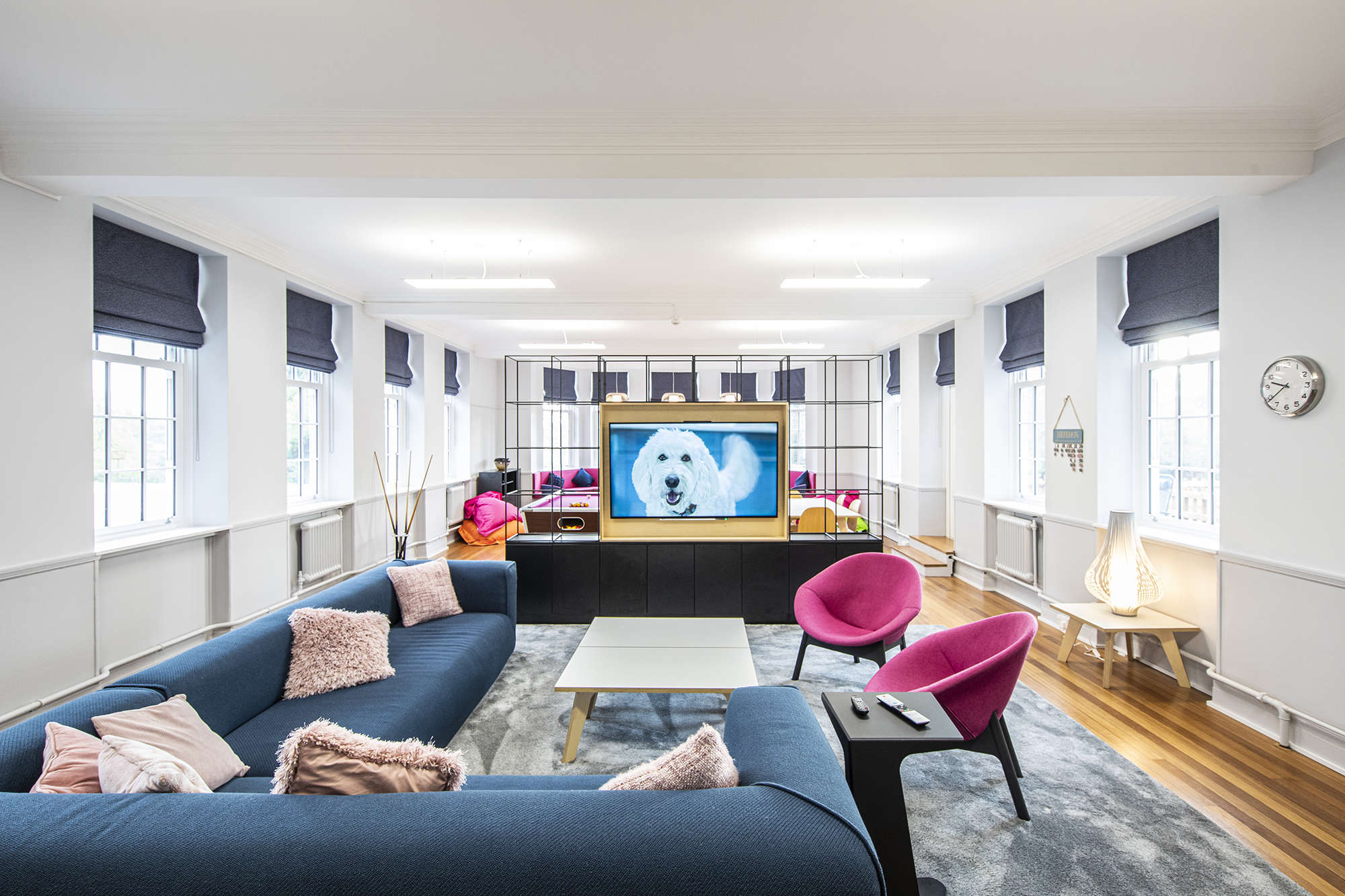
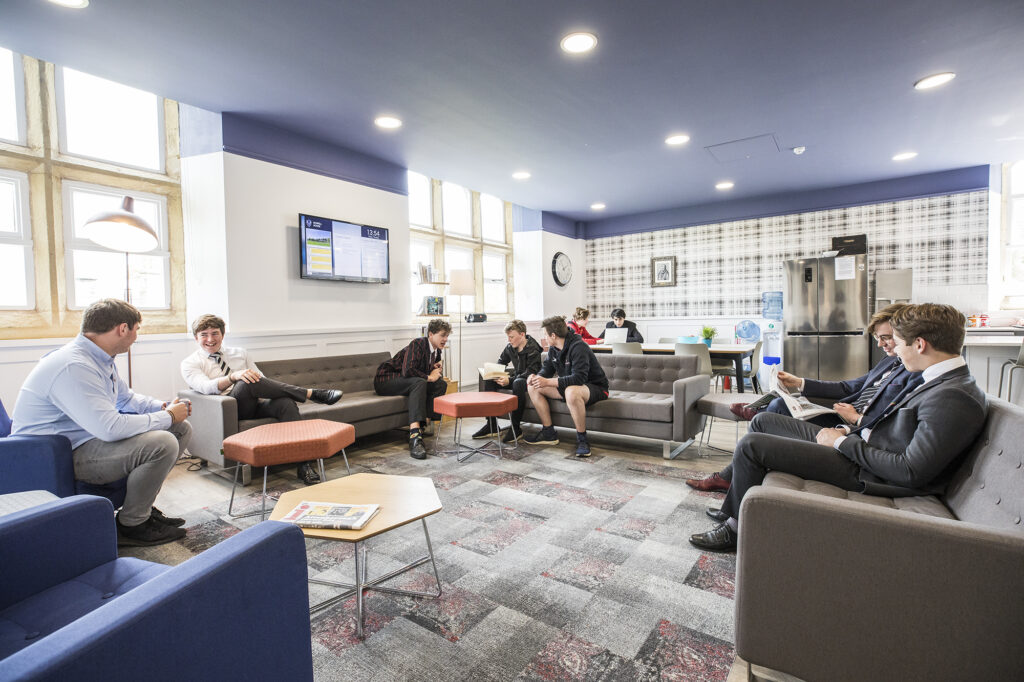
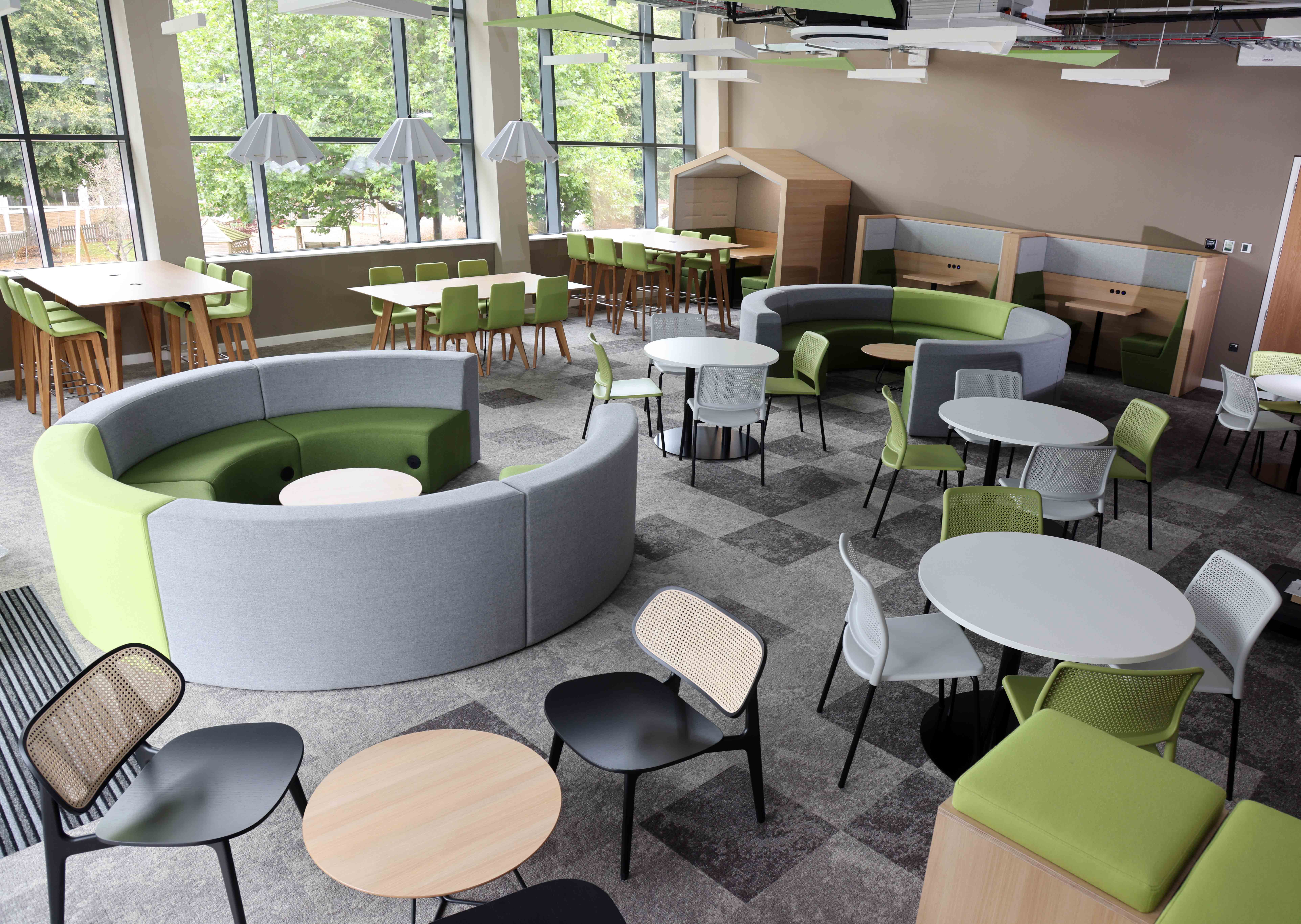
Effective boarding space design requires intentionality, defining what a space is for at any given moment, and for whom. This does not preclude a space being used in multiple ways; it means being purposeful about how those uses are sequenced, timed and communicated. A common room might support collaborative study in the afternoon, social connection in the early evening, and quiet reflection before bed, but each of those uses should be designed for, not assumed. This is the magic of blending intentional space design with intentional curriculum design.
Privacy, Community, and the Neuroscience of Balance
One of the most debated questions in boarding space design is how to balance privacy with community. There is no universal answer. What is right for a large co-educational senior school may be entirely wrong for a smaller prep school. However, neuroscience offers a useful framework; students require both stimulation and recovery, both connection and solitude, to thrive.
Where boarding environments offer insufficient privacy, whether physical or psychological, students can experience sensory overload that accumulates across the day. This is particularly significant for students who may have spent their school day in highly communal learning environments. Conversely, excessive isolation can undermine the relational and social benefits that make boarding distinctive.
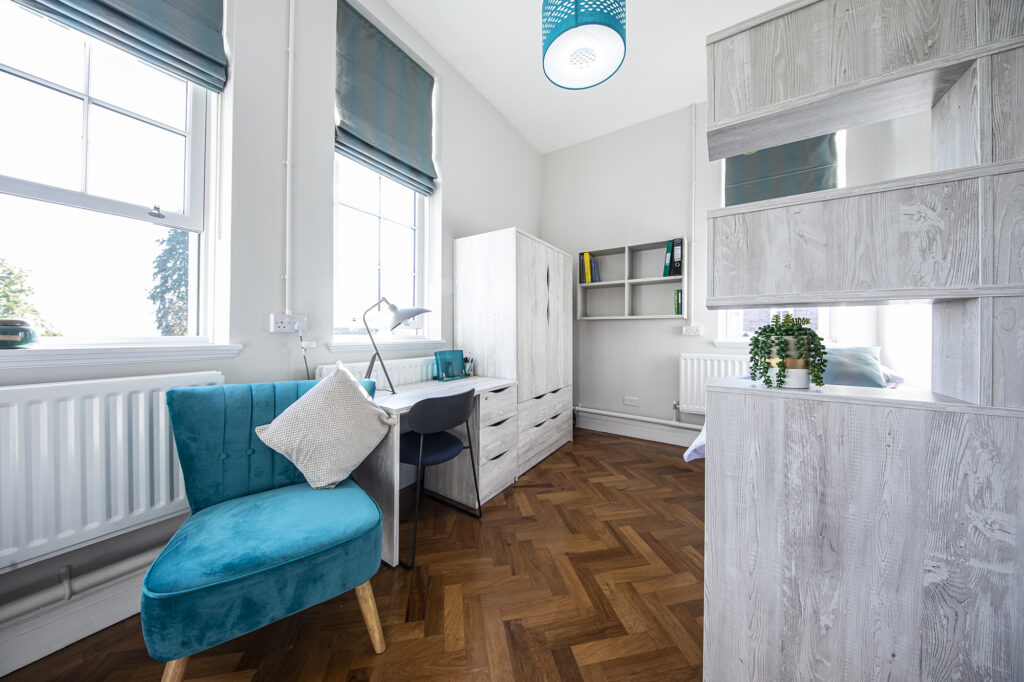
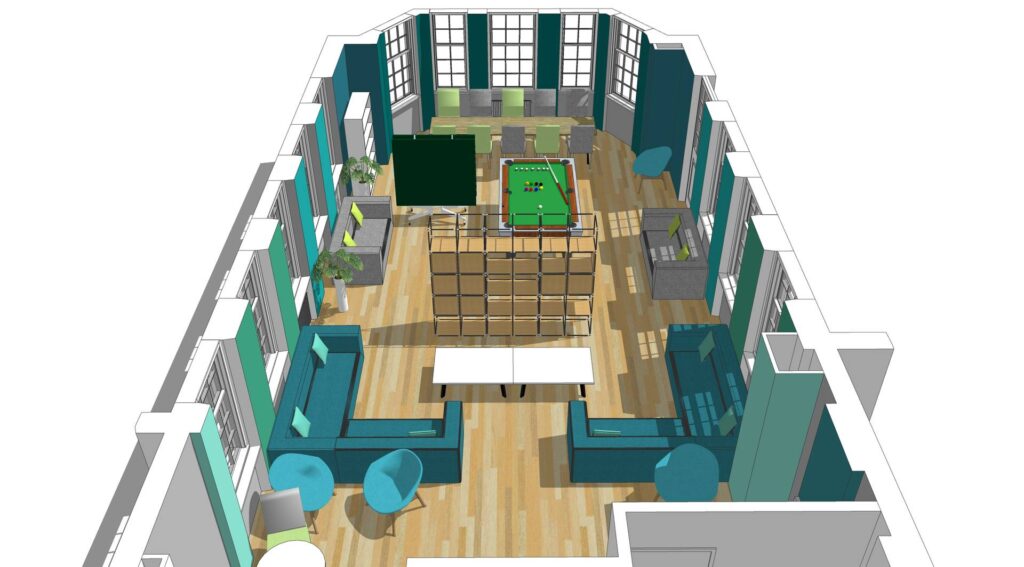
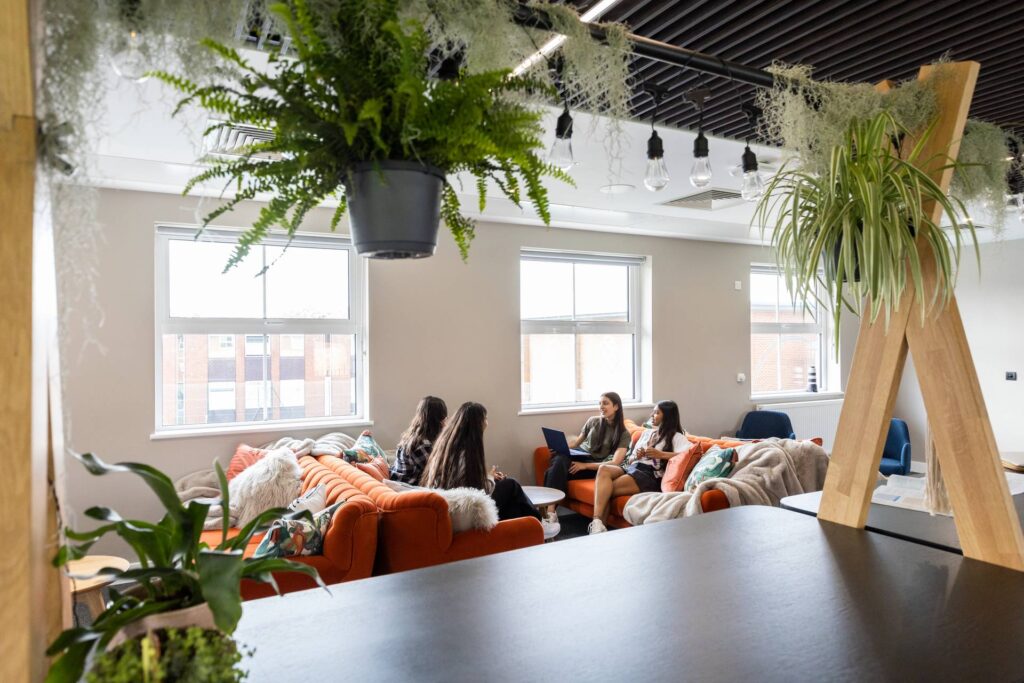
The implication for design is that both dimensions must be explicitly planned for. Schools that offer a thoughtful gradation of spaces, from communal hubs to semi-private study areas to genuinely private retreats, are better positioned to meet the diverse and shifting needs of their student bodies at any age, stage or given time of day.
Data as the Foundation for Strategic Design
Historically, decisions about boarding space have often been driven by intuition, maintenance cycles, or the preferences of individual leaders. This is increasingly insufficient in an environment of commercial pressure, regulatory scrutiny, and rising expectations. Data, collected systematically and interpreted strategically, provides the foundation for decisions that are defensible, purposeful, and aligned with the school’s broader mission.
The most relevant data for boarding space strategy spans several domains:
•Stakeholder perception; what are the expectations of current and prospective families
•Market positioning, how the school’s boarding offer compares within its competitive landscape
•Space utilisation; understanding which spaces are used, when, and by whom
•Comparing performance between boarding and day students
•Progress in academic outcomes
•Progress in wellbeing using metrics such as motivation, resilience, learner energy, and character development
The power of data lies not in any individual dataset but in the connections between them. Boarding teams often hold a uniquely holistic view of students, observing them across the full twenty-four hour cycle in ways that classroom teachers cannot. This positions pastoral staff as important data analysts, capable of identifying patterns in learner engagement that academic metrics alone miss. They capture the feelings through the language of learning, through communication.
When boarding data is triangulated with academic and extracurricular data, schools gain a richer understanding of how their school environment is performing, and where investment is most likely to yield results. This integration also provides a compelling narrative for governors, trustees, and prospective families; evidence that the boarding environment is not a cost centre but a driver of the outcomes families value.
Future-Proofing the Boarding Offer
Schools that rely solely on feedback from current families to shape their boarding offer are, by definition, looking backwards. The strategic challenge is to anticipate how expectations, demographics, and learning paradigms will shift, and to design environments that will remain relevant and competitive as those shifts occur.
Several external trends warrant attention:
• Geopolitical shifts are affecting international student recruitment patterns.
• Technology is transforming where, how, and with whom students learn, untethering learning from fixed locations and times in ways that have significant implications for how boarding spaces need to function.
• An increasingly informed parent and student body means that expectations are rising faster than many schools have been able to respond.
At its best, a well-designed boarding environment, underpinned by neuroscience and connected to the academic curriculum, represents a genuinely differentiated offer. It provides something that day schools cannot easily replicate; an environment intentionally designed to optimise the development of the whole child, in a community of peers, under the guidance of skilled pastoral professionals with common goals.
Conclusion
The future of boarding spaces is not simply a question of refurbishment or modernisation. It is a strategic question about how schools understand the relationship between environment, learning, and wellbeing, and how they translate that understanding into spaces that serve students, staff, and the school’s long-term mission.
Schools that approach this question with intentionality, grounded in data and informed by the latest thinking in neuroscience and design, will be well placed to deliver outstanding boarding experiences and to demonstrate their value to an increasingly discerning market. Those that do not risk being left behind, not through any dramatic failure, but through the slow erosion of relevance in a sector where the expectations of what a boarding school can and should be are rising rapidly.
• Where does a journey to exceptional boarding begin? Ask yourself:
• What are we designing for?
• What does our data tell us?
• How do our spaces, our curriculum, and our community combine to create something that is truly greater than the sum of its parts?
When a ‘whole’ is truly greater than a ‘hole’ because it has added together the very best people with the very best pedagogy in the very best places to play a very small part in a much bigger era; the education revolution.






Leave a Reply