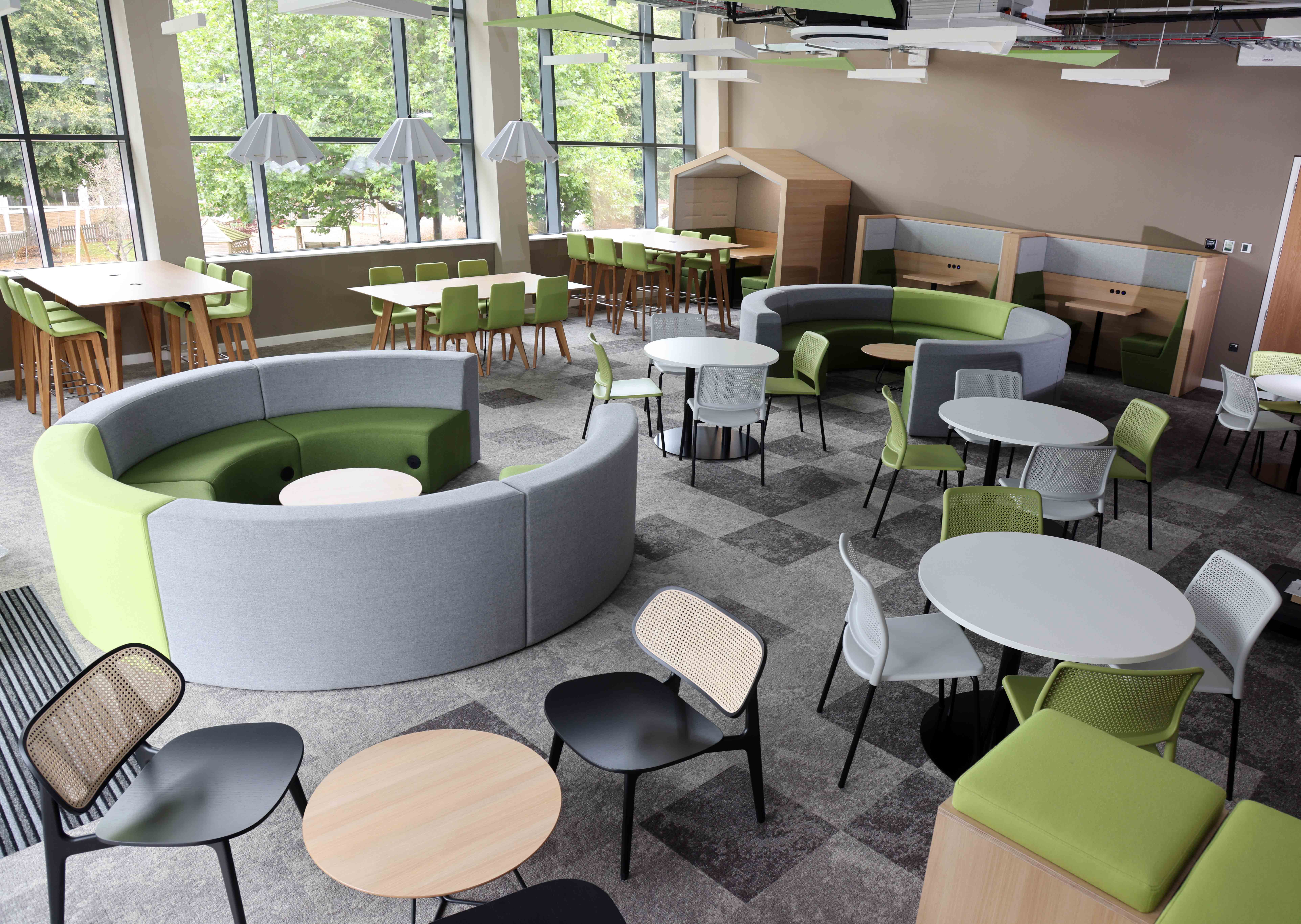
Every day at Noble + Eaton, I get to focus on my absolute passion: bridging the gap between education and health to design schools where children genuinely thrive. Staying at the very forefront of educational research allows us to bring the most effective, forward-thinking strategies directly into the classroom. Attending conferences to learn and share all the fantastic research that is happening in the world of education and healthcare is what I care about. The Adaptive Teaching and Learning in the Classroom Conference, hosted by Neuroscience for Education was an incredibly inspiring day packed with insights from world-class experts, focusing on the exact intersection of neuroscience, future-ready pedagogy, and AI that drives our designs. It was also an absolute pleasure to return to Woldingham School for the event. Our team has worked closely with the school to design their new Sixth Form Centre, so being back on campus felt incredibly special. The day reinforced the powerful way in which the emotional connection to the physical space impacts learning. Here are a few of my key takeaways:
The Biology of Learning:
Professor Tricia Riddell dove deep into how the balance between fast and slow thinking dictates the emotional reality of a student. Whilst some of this research was not new, the thinking around its application most certainly is. True learning cannot happen if a child does not feel emotionally safe or physically comfortable. From a neurological perspective this is very complicated, the timing of the firing and wiring of synapses, the relative weighting of those given their frequency of engagement through the energy available within the ‘system’ at any moment in time. She asked us to consider the difference between the internal processing and external signals to be able to understand what is autonomous, fast, and unconscious and what is slower, considered, and therefore takes more energy. When you design learning experiences with an understanding of this you are designing a thriving space.
Skills for a Future Workforce:
Jonnie Noakes linked this understanding of neurology to character education and human flourishing; the data we must link together to turn the invisible to the visible. Diving into many different aspects of educational research from changes that are being seen to the ZPD (zone of proximal development) when we use technology in teaching, to the global research into what ‘creativity’ means and looks like for developing future skills through the OECD compass. If the ZPD is increasing when we engage with technology, our ‘comfort zone’ is changing. This fundamentally changes what we need to be designing in lessons to engage students. From a future skills perspective, all the research says the same; intertwine emotional connections to learning with the creativity skills demanded by a modern workforce. To do this, we need to focus on skills and character education. In short, he asked us to frame our expectations. What is the purpose of education? This is your biggest risk. When expectations don’t align, it’s not that your learning environments don’t thrive; they simply don’t work.
Intentional AI Frameworks:
Dr Iro Konstantinou challenged us to think about the ethics of critical thinking and AI “cognitive offloading”. She asked us to think about the internal and external data we are being presented with carefully. Do we have our expectations aligned? If we do, how do we deliver them? We must design our curriculum tools to enhance deep thinking, ensuring technology enhances learning rather than replacing it. At the same time, we cannot forget the broad, holistic nature that education must provide. Getting that balance right is entirely unique to your specific demographics and context. This is exactly why truly understanding your school and the unique community it serves is vital. Yes, there can be a framework, but it is how it is applied that determines the outcomes. One example she used was an example of scaffolding in action; linking colour psychology to insurance is a way in which you can directly reduce any risks to a school.
Metacognitive Coaching:
McKenzie Cerri shared a powerful coaching approach for when learning gets stuck shifting our vocabulary from “why” to “what”. A brilliant example from the presentation mapped out a continuum from coach to mentor to consultant, and where a teacher sits, right in the middle! Understanding exactly which role you are playing in any given context is what makes the complexity of teaching cognitively demanding. More than this, every lesson, every day, every week, every year is different. This can bring excitement for some, anxiety for others. So rather than thinking about why someone would want to become a teacher, we need to think about what would make some want to become a teacher? What balance of routine and novelty do we need to be able to engage people to want to work with us in this new era of education? What is the role of a ‘teacher’? What could it look like? How do we make sure that the very best job in the world attracts the very best people in the world? How do we know?
Education Beyond Subjects:
The final session of the day by Dr James Mannion perfectly tied everything together. He described how to move beyond rigid subject blocks through intentional curriculum design, embedding all these neurological and psychological strategies into a single, cohesive, deliverable framework. His approach to curriculum design took ergonomic principles to a deeper level by diving the organisational aspects, the connection of the place to the pedagogical strategies, into emotional, behavioural and relational learning. These were mapped and then tracked through skills to show learner progress. If we want to be able to track learning, we need to map it. We need to map what the heart is telling us against what the head is processing to the actions we see.
Ultimately, beautiful school spaces are useless if they don’t actively improve teaching and well-being. We collect the data to help you to do just that and for me this conference reinforced the art of the possible.
• When you move from passive to active learning, you increase the behavioural learning; you move from disengaging to engaging teaching and learning
• When you move from passive to active connection, you increase emotional learning; you move from disengaging to engaging teaching and learning
• When you move from passive to active skills development, you increase the relational learning; you move from disengaging to engaging teaching and learning







Leave a Reply