Through the hardest test of investment decision-making the independent sector has faced in a generation, schools have kept investing. Strategic capital projects were approved this year, some of them ambitious. What changed is the bar. The 2026 ISC census recorded pupil numbers down 3.5 per cent in a single year, boarding down more than 8 per cent, and a record 1.1 billion pounds of schools’ own money committed to fee assistance. Money is still moving, but only towards cases that can survive far harder scrutiny than they would have faced two or three years ago. And yet, through all of it, schools and colleges have kept investing. Strategic capital projects have been approved this year, some ambitious ones. What’s changed is the bar. Money is still moving, but only towards cases that can survive far harder scrutiny than they’d have faced two or three years ago. Which brings us to the other side of that story. Every year, good projects in independent schools quietly die, and this year more than most. Not bad projects. Not vanity projects. Genuinely worthwhile plans to improve the spaces where pupils learn, board and grow, developed by capable people who believed in them. They don’t die dramatically. There’s rarely a moment where a board says no outright. More often the project drifts, gets deferred a term, gets deferred a year, and eventually stops being mentioned. The idea was sound. The design was often excellent. What failed was the journey from good idea to approved project, and that gap is where most estate ambition in our sector is lost. Looking back across the last academic year, the projects that stalled almost never stalled because of the quality of the thinking behind them. They stalled for a handful of reasons that repeat so consistently they’re worth naming.
HIGHER BAR • SMARTER INVESTMENT • STRONGER SCHOOLS •
THE RIGHT PROJECTS WILL ALWAYS FIND A WAY
The business case was an architecture case.
The proposal described what would be built rather than what it would change. When the board asked why this and why now, the honest answer underneath the presentation was that the space is tired. That’s true of most spaces in most schools. It isn’t an argument. The projects that got through this year could draw a line from the space to something the board already cared about, retention, recruitment, the parent experience, how the estate supports the fee being charged.
It was framed as improvement when boards are funding survival and growth.
With numbers falling and margins under pressure, spend is being triaged ruthlessly. Anything positioned as making things nicer loses to anything positioned as protecting pupil numbers or opening up revenue. The same project can often be either. The framing decides its fate.
Support was assumed rather than built.
Approval isn’t won in the meeting where the decision is made. It’s won in the months beforehand, in whether the people who will sit in that room, bursar, governors, trustees, investors, have had a genuine hand in shaping the case or are simply being asked to endorse someone else’s conviction. When support hasn’t been built across the right people at the right level, the room is lukewarm, and lukewarm is fatal. Enthusiasm from the front of the room doesn’t survive silence around the table.
One unanswered doubt beat ten enthusiastic supporters.
This is the most human reason and, in our experience, the most common. In almost every final decision-making group there’s someone whose gut says risk. Often it’s the person with the finance or property background, the one whose job is to worry. And the response they get is a pitch about beautiful design, flexible learning environments, spaces fit for the future. None of that touches the fear. Their fear is about overspend, disruption, and whether pupils and parents will actually notice the difference. Vision language makes it worse, because it confirms the suspicion that nobody has thought hard about the downside. What settles that doubt is evidence. A baseline of how the spaces perform now. Comparable outcomes from schools that have done this. A clear connection between the investment and the numbers the sceptic cares about. Good design doesn’t lose to scepticism. Unevidenced design does.
Nobody could quantify the problem.
Most schools can’t answer basic questions about how their spaces currently perform, how they’re used, how pupils and staff experience them, where they help and where they hinder. Without that baseline there’s nothing to argue from, and no way to show afterwards that the investment worked. It’s very hard to fund the solution to a problem you can’t measure.
The calendar did the rest.
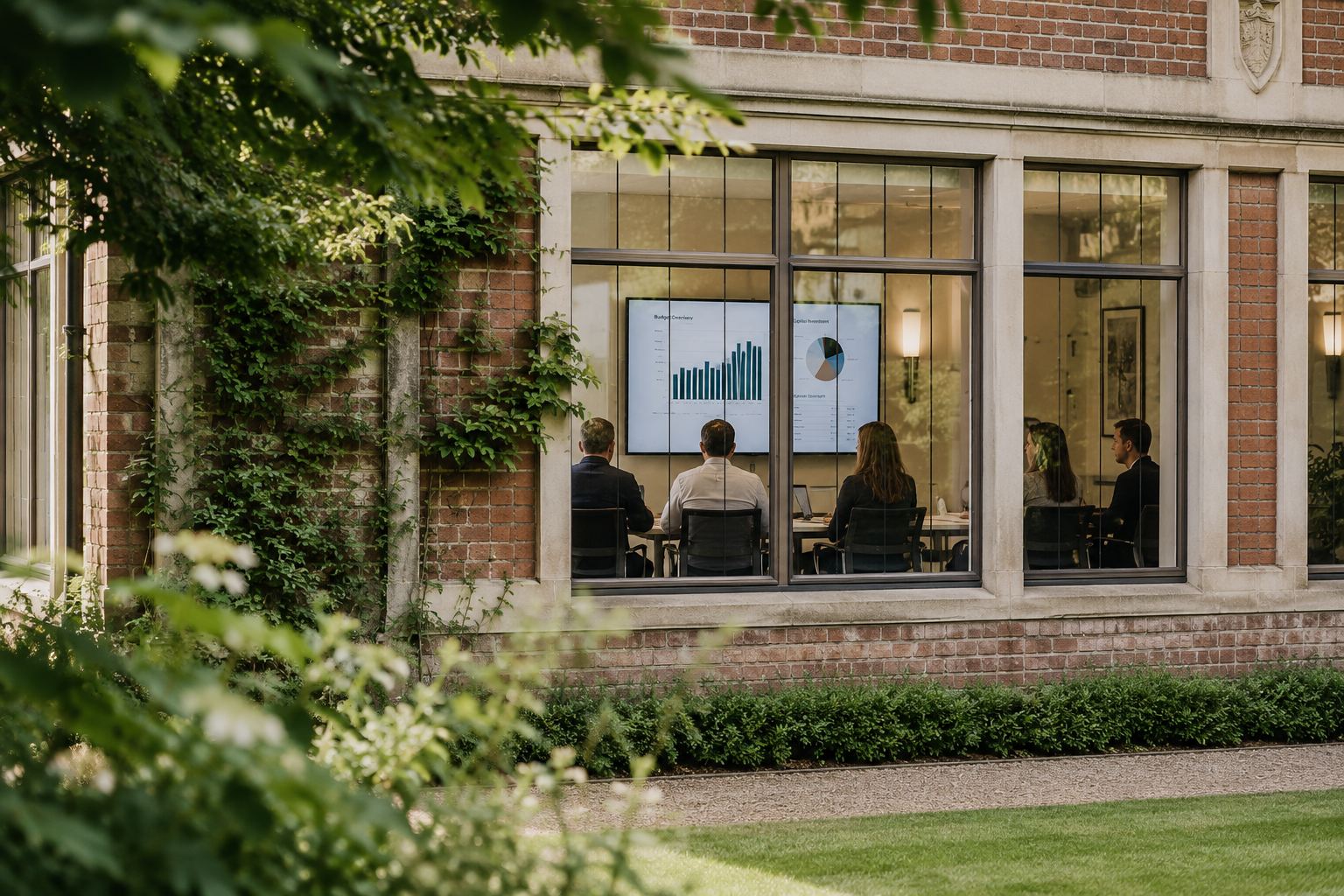
School projects live and die by holiday windows. A decision that drifts past the point where delivery is possible in the next window becomes not yet, then not this year, then nothing. Looking back across the projects we’ve seen approved this year, they weren’t necessarily the best designs. They were the best-argued cases. Someone had done the diagnostic work before asking for the money, and had turned a design ambition into an argument a careful board could say yes to.
Which prompts a question worth sitting with over the summer. If your next estate project reached the final room today, could it survive the sceptic?
Source: Independent Schools Council, Annual Census 2026 (published June 2026, covering 1,455 ISC member schools). Figures cited: total pupil numbers of 526,611, a 3.5% fall on 2025 and approximately 30,000 fewer pupils since the introduction of VAT on fees; boarding numbers down 8.2%; sharpest declines at reception, year 7 and sixth form entry; average fee increases of 4.4% before VAT; and £1.1 billion in fee assistance funded from schools’ own resources. Available at isc.co.uk.


Leave a Reply