
Let There Be (Better) Light

Why upgrading your school’s lighting could be the smartest investment you make this year.
By Dr Shelley James, Lighting Consultant
Ask most school leaders what they think about when improving student outcomes, and you’ll hear about curriculum, staffing, pastoral care — and rightly so. What you won’t often hear about is the ceiling — or the windows. Yet the lighting conditions may be quietly working against everything else you’re trying to achieve: disrupting sleep, dampening mood, fuelling fatigue, and making it harder for some of your most vulnerable students to concentrate, regulate their behaviour, and stay in the room, both physically and mentally.
I’ve spent years working with schools, healthcare settings and workplace designers on the science of light and human performance. The evidence is compelling — and the good news is that getting lighting right doesn’t have to cost a fortune. In fact, done properly, it can save you money while giving your school a genuine edge.
Light is Not Just for Seeing
We have known for decades that good lighting supports visual comfort and communication, performance and accuracy, especially for technical subjects like science and art. What is less widely understood is that light regulates the brain. Scientists have identified a third type of photoreceptor in the human eye — distinct from the rods and cones that handle vision — that feeds directly into our biological clock. These intrinsically photosensitive retinal ganglion cells are most sensitive to short-wavelength ‘blue’ light, and their influence reaches into almost every aspect of our physiology: sleep, mood, memory, hormone regulation, motor activity, and cognitive performance.
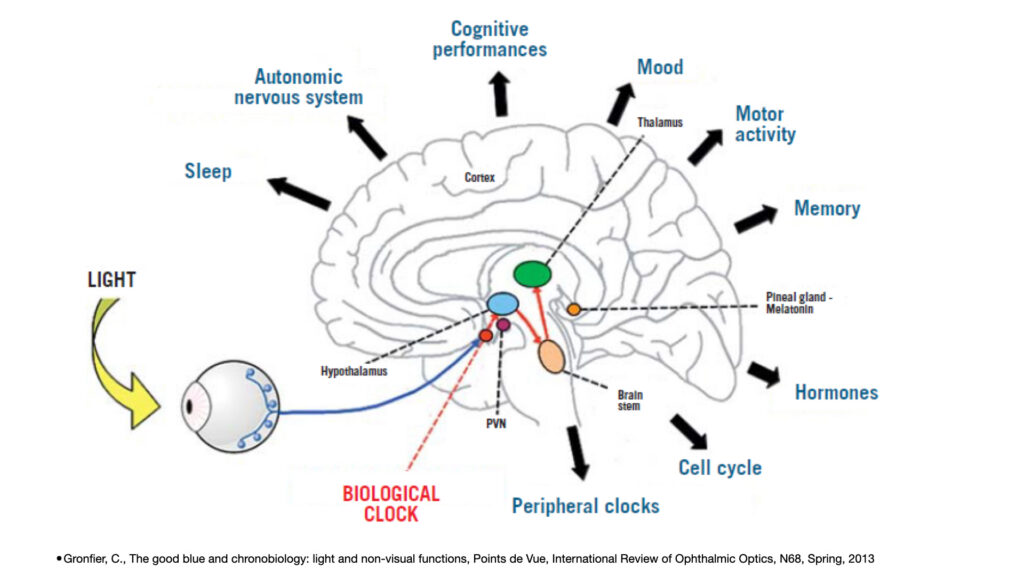
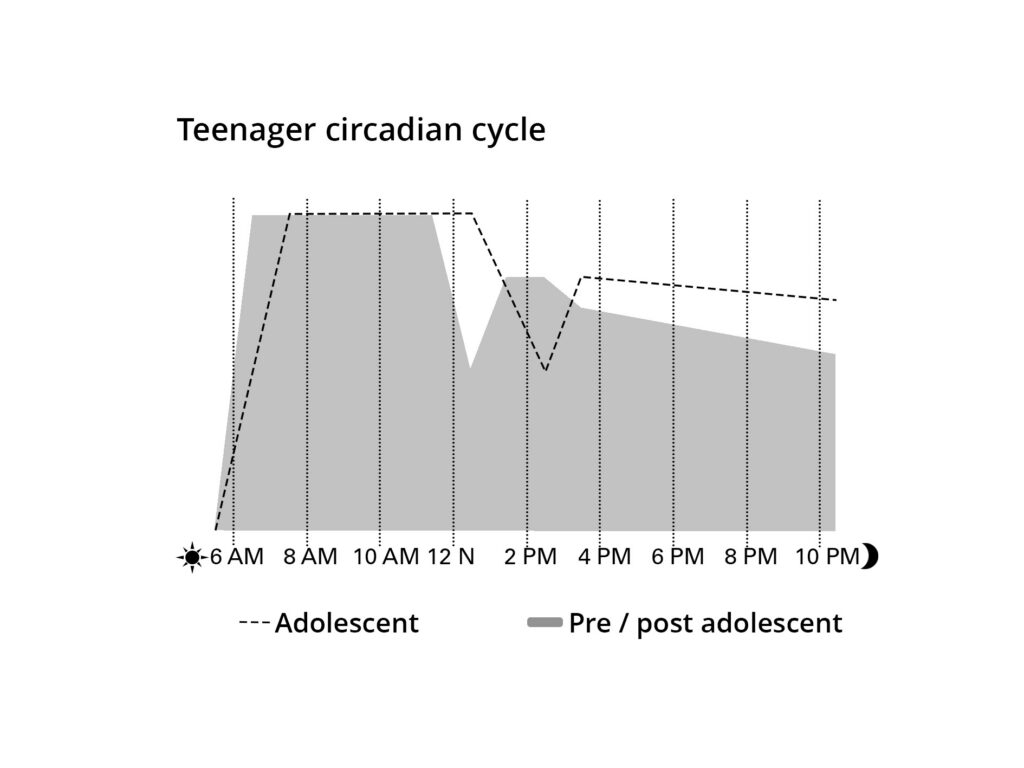
In practical terms, this means that the quality of light your students sit under at 9am is not just helping them read the whiteboard — it is either supporting or undermining their alertness, their emotional regulation, and the quality of sleep they will get that night. For sixth-form students in particular, this matters enormously. Adolescent body clocks run around two hours later than those of adults, meaning teenagers are already fighting their own biology when they arrive at school in the morning. Bright, blue-enriched light in those early lessons can help shift the body clock earlier — improving alertness in the moment and sleep quality in the hours that follow. In winter, when students may travel to school and return home in darkness, that morning light exposure can make a meaningful difference to their entire day.[1]
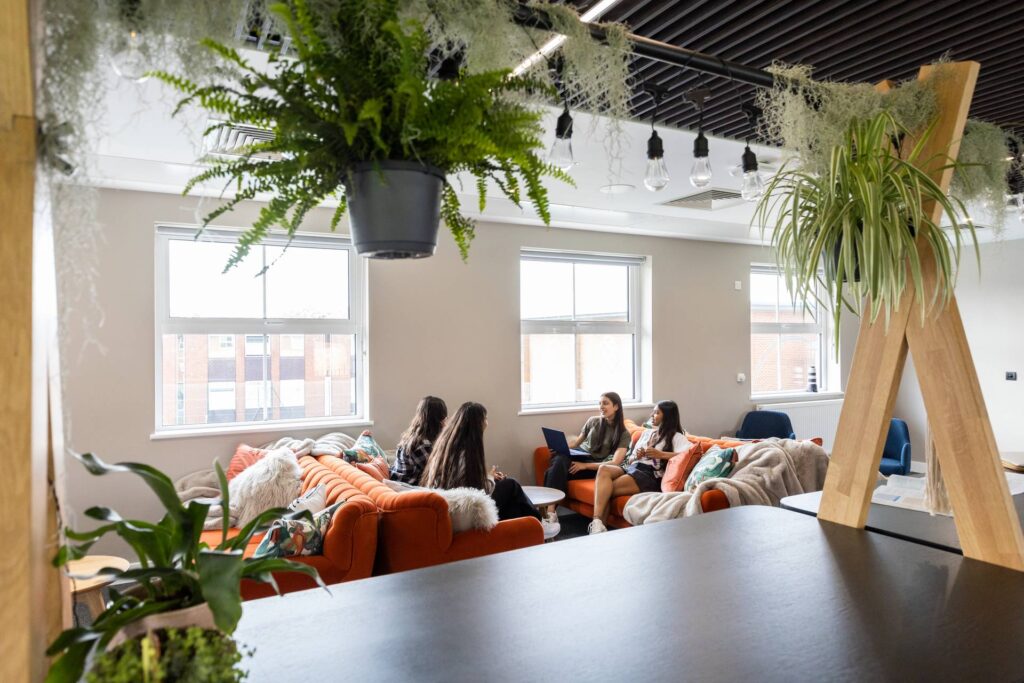
When it comes to supporting both biological function and a sense of well-being, natural daylight remains the gold standard. It provides a rich, dynamic spectrum of wavelengths that artificial sources can only approximate, and access to views and daylight is consistently associated with improved mood, alertness and perceived comfort.[2] Where it is possible to design for good daylighting — or to maximise what already exists through thoughtful furniture positioning and removing unnecessary obstructions — it should absolutely be the first consideration.
That said, daylight is not without its complications. Glare from uncontrolled sunlight is one of the most commonly cited causes of discomfort in learning environments, and can be particularly problematic in rooms where screens are in use — increasingly, that means almost everywhere. Privacy is another consideration, especially for vulnerable students.
The practical reality is that most schools cannot rely on daylight alone, and many existing buildings offer limited or poorly oriented glazing. The question, therefore, is how to design artificial lighting that complements and compensates for what daylight cannot reliably deliver — and that actively supports the biological processes that good daylight would otherwise be driving.
Designing for the Modern Classroom
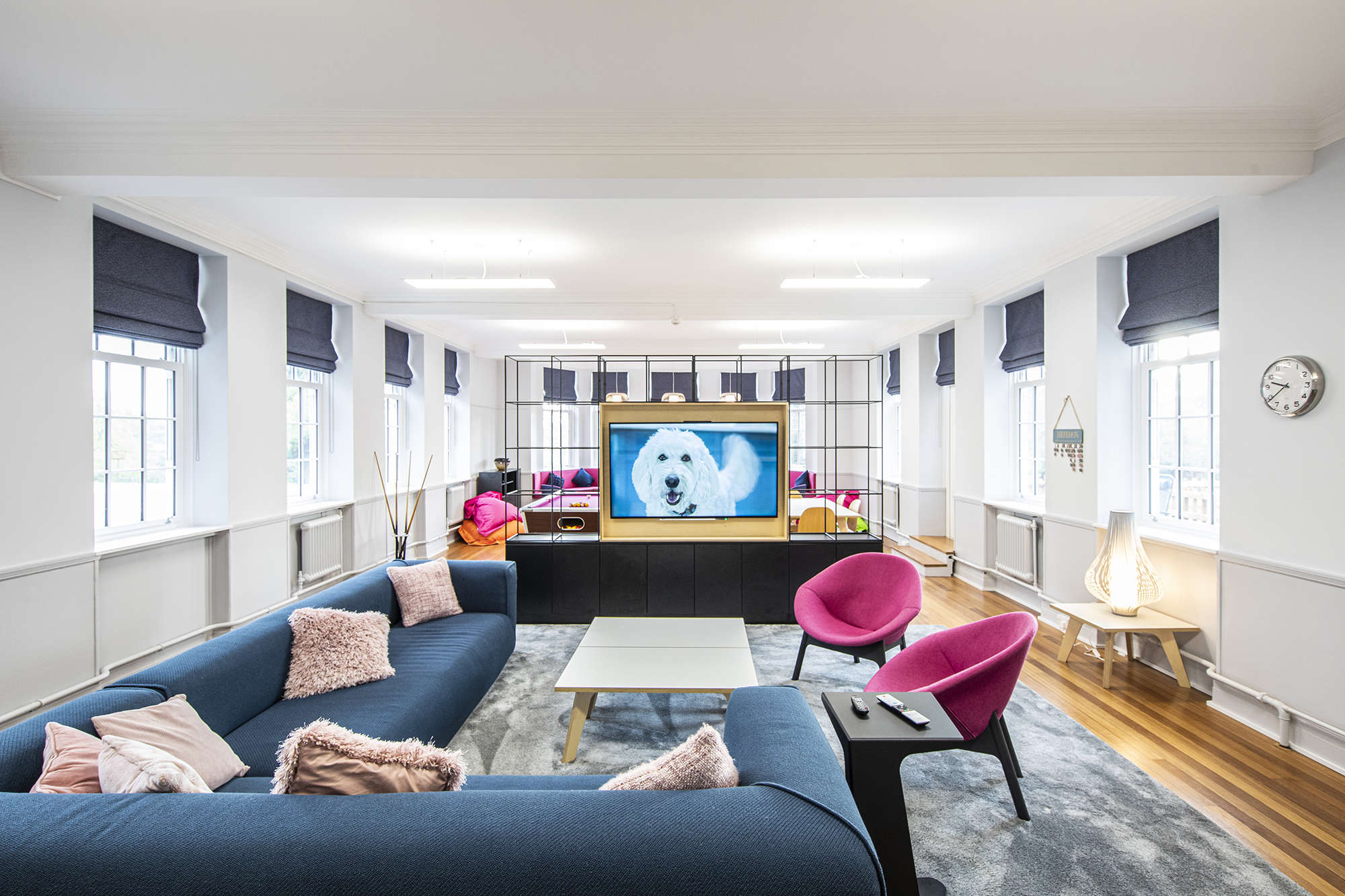
The sixth-form classroom of today looks rather different from the one most school leaders were taught in. Interactive whiteboards, large display screens, personal devices and hybrid teaching arrangements are now standard in most well-equipped schools — and the lighting needs to keep up. Poorly considered lighting in a screen-heavy environment creates a new set of problems: glare on display surfaces, unflattering downlights that undermine confidence on video conference calls, and the painful dry eye ‘computer vision syndrome, neck and back ache that comes from poorly managed contrast between bright screens and dark surroundings.
Modern office design has grappled with exactly these challenges and arrived at clear answers: ergonomic desk designs integrated with layered lighting schemes that allow different zones and tasks to be lit differently, with control over both the direction and intensity of light; careful attention to the colour rendering index of light sources, so that faces, materials and content appear accurately and comfortably; and the elimination of flicker, which — even below the threshold of conscious perception — can cause headaches and discomfort for sensitive individuals. The best-designed sixth-form environments are now drawing on these principles, treating the classroom not as a passive backdrop but as an active component of the learning experience.
There is also a broader point here about aspiration. Sixth form is, for many students, the bridge between school and professional life — whether that means university, an apprenticeship, or direct employment. The environment in which that transition takes place sends a signal. Students who work in spaces designed to the same standard as a well-considered office or graduate-entry workplace are not just more comfortable; they are being shown, implicitly, what it looks and feels like to be treated as a professional. That matters for motivation, for self-perception, and for recruitment.
The Stakes for Students
Poor lighting does not affect all students equally. An estimated 1.6 million school-age children in the UK are living with an undetected vision problem that directly interferes with their learning.[3] Over half of students with autism spectrum conditions experience significant visual discomfort, linked to poor concentration, headaches, and behaviour difficulties.[4] For these students, an environment with inappropriate lighting is not merely uncomfortable — it can be a genuine barrier to engagement.[5]
Beyond students with specific needs, there is strong evidence that all students’ perception of their learning environment affects their academic achievement. A student’s sense of ease, safety and comfort in their school building mediates their performance. [6] The environment is not a neutral backdrop to learning; it is part of the learning itself. Notably, the evidence suggests that students from socioeconomically disadvantaged backgrounds may be even more responsive to improvements in indoor environmental quality — meaning that better lighting is not a luxury for the few, but a powerful lever for equity.[7]
The Impact of your Teams
Lighting that supports students also supports teachers and the critical operational and administrative teams who support them. The physical and psychological comfort delivered by well-designed learning environments — including light quality, air quality and thermal comfort — has a measurable effect on office workers and teacher engagement, performance, and retention alike.[8], [9] In a profession under significant pressure, this matters. Teachers in schools where smart lighting systems allow them to shift the mood of the room — from a focused, task-oriented setting to a warmer, more collaborative atmosphere — have reported not only feeling better at work, but actively using the lighting as a teaching tool. [10]
One school that upgraded its lighting and acoustic environment for students with hearing difficulties found that teachers could meaningfully engage with students across the whole room, rather than only those directly in front of them. The school subsequently attracted local authority funding to develop specialist provision. These are not trivial outcomes.
A Note about Boarding Schools
For schools with boarders, the lighting brief extends well beyond the classroom day. Evening and night-time conditions are just as consequential as those in the morning — perhaps more so. The two hours before sleep are critical for the biological wind-down: melatonin secretion, which is essential for sleep onset, is suppressed by light exposure, particularly at the blue-enriched end of the spectrum. Boarding house common rooms, study spaces, and corridors lit with standard cool-white LEDs in the evening hours are, in effect, sending the wrong biological signal at exactly the wrong time.
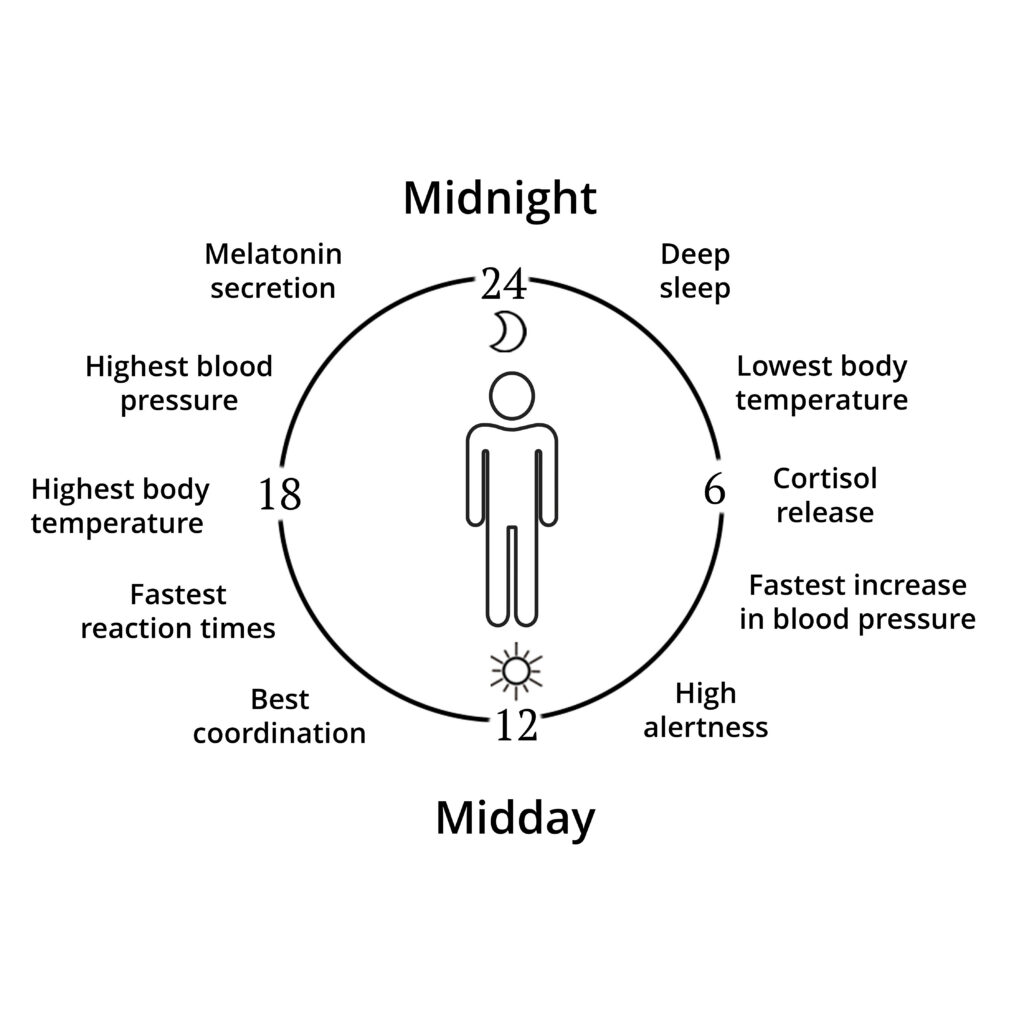
Scientific guidance is clear: evening environments should offer warm, low-intensity light – below 10 Melanopic EDI, roughly equivalent to 20 lux from a standard LED — in the two hours before students retire. [11] Night-time lighting in bathrooms, corridors and shared spaces should be as dim as possible, with growing evidence that artificial light at night is a significant risk factor for depression, [12] and other behavioural health outcomes.[13]
Getting this right in a boarding context requires the same kind of intentional design that applies to classrooms. The same strategic, zone-by-zone approach to retrofitting makes it entirely achievable without major disruption.
The Business Case is Stronger Than you Think
Smart LED systems can be retrofitted progressively — one wing, one block, one phase at a time — with minimal disruption to normal operations. LED systems can achieve 50% energy.
savings over conventional lighting; with smart controls and occupancy sensing, that figure can exceed 80%. Current building regulations already require smart controls, including occupancy and daylight sensing in non-domestic buildings, so the question is not whether to invest, but how to do so wisely.[14]
One school in London has gone further, using the lighting infrastructure and occupancy sensors — paired with simple geolocation tags carried by students — to automate the register, freeing up days of staff time each term. The same system recovered over £1,000 in lost property. These are the kinds of secondary benefits that shift smart lighting from ‘nice to have’ to essential operational requirements.
And then there is the competitive dimension.
In a sixth-form landscape where student recruitment increasingly depends on reputation and the quality of the experience on offer, the environment you provide is an essential part of your proposition. Getting the lighting right is one of the most powerful, and most overlooked, ways to stand out from the crowd.
The ceiling counts – It’s time to look up!
[1] The influence of intensity and timing of daily light exposure on subjective and objective sleep in adolescents with an evening circadian preference. Sleep Med. 2021 Mar;79:166-174. doi: 10.1016/j.sleep.2020.11.014. Epub 2020 Nov 16. PMID: 33262011; PMCID: PMC7925365.
[2] Geddam, D., Giduturi, V., & Mugada, V. (2024). “Lighting The Way To Better Learning: Assessing And Addressing Artificial Light Concerns In Classrooms”. Educational Administration: Theory and Practice, 30. https://doi.org/10.53555/kuey.v30i5.4040
[3] https://www.visionmatters.org.uk/news/news/post/105-16million-school-aged-children-estimated-to-be-living-with-an-undetected-vision-problem
[4] How Sensory Experiences Affect Adolescents with an Autistic Spectrum Condition within the Classroom https://link.springer.com/content/pdf/10.1007/s10803-015-2693-1.pdf
[5] Pili, R., Zolo, B., Farris, P., Penna, V., Valinotti, S., Carrogu, G. P., Gaviano, L., Berti, R., Pili, L., & Petretto, D. R. (2021). Autism and Visual impairment: A First Approach to a Complex Relationship. Clin Pract Epidemiol Ment Health, 17, 212-216. https://doi.org/10.2174/1745017902117010212
[6] Choi, K., & Suk, H.-J. (2016). Dynamic lighting system for the learning environment: performance of elementary students. Optics Express, 24(10), A907-A916. https://doi.org/10.1364/OE.24.00A907
[7] Edgerton, E., & McKechnie, J. (2023). The relationship between student’s perceptions of their school environment and academic achievement [Original Research]. Frontiers in Psychology, Volume 13 – 2022. https://doi.org/10.3389/fpsyg.2022.959259
[8] Arata, S., Sugiuchi, M., Ikaga, T., Shiraishi, Y., Hayashi, T., Ando, S., & Kawakubo, S. (2023). Economic benefits of the effects of office environment on perceived work efficiency and presenteeism. Building and Environment, 243, 110712. https://doi.org/https://doi.org/10.1016/j.buildenv.2023.110712
[9] Atyah, R. (2020). The Effects of the Physical Environment Design on Teachers’ Workplace Comfort: A Critical Review. The International Journal of Architectonic, Spatial, and Environmental Design, 14, 17-30. https://doi.org/10.18848/2325-1662/CGP/v14i03/17-30
[10] https://www.energy.gov/sites/prod/files/2019/05/f62/classroom-lessons_lda-may2019.pdf
[11] Houser, K. W., & Esposito, T. (2021). Human-Centric Lighting: Foundational Considerations and a Five-Step Design Process [Review]. Frontiers in Neurology, 12. https://doi.org/10.3389/fneur.2021.630553
[12] Chen, M., Zhao, Y., Lu, Q., Ye, Z., Bai, A., Xie, Z., Zhang, D., & Jiang, Y. (2024). Artificial light at night and risk of depression: a systematic review and meta-analysis. Environ Health Prev Med, 29, 73. https://doi.org/10.1265/ehpm.24-00257
[13] Walker, W. H., Walton, J. C., DeVries, A. C., & Nelson, R. J. (2020). Circadian rhythm disruption and mental health. Translational Psychiatry, 10(1), 28. https://doi.org/10.1038/s41398-020-0694-0
[14]https://assets.publishing.service.gov.uk/media/63d8edbde90e0773d8af2c98/Approved_Document_L__Conservation_of_fuel_and_power__Volume_2_Buildings_other_than_dwellings__2021_edition_incorporating_2023_amendments.pdf
Leave a Reply