The Festival of Education, British International School of Washington
2026: What the Best Coaches See
Dr Joanne Ladds, Noble + Eaton
In October I was invited to the Festival of Education at the British International School of Washington, to share the design of the school’s Knowledge Hub and to listen to the people behind the research. It was a privilege.
The festival is one of a series of events held around the world. I’m still wearing my bracelet from the day, with a smile, to remember the people, the conversations and the work they are doing.
The Knowledge Hub
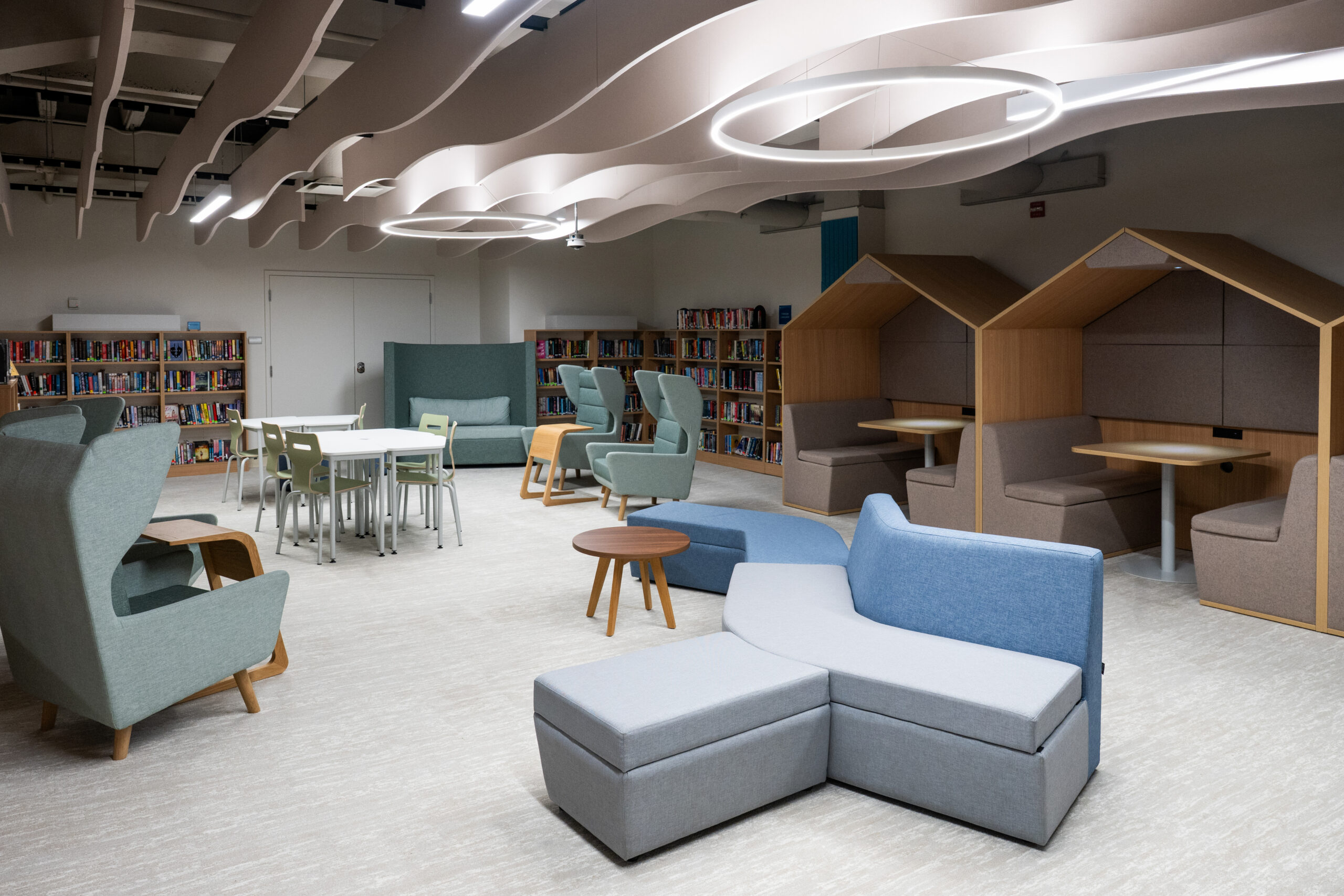
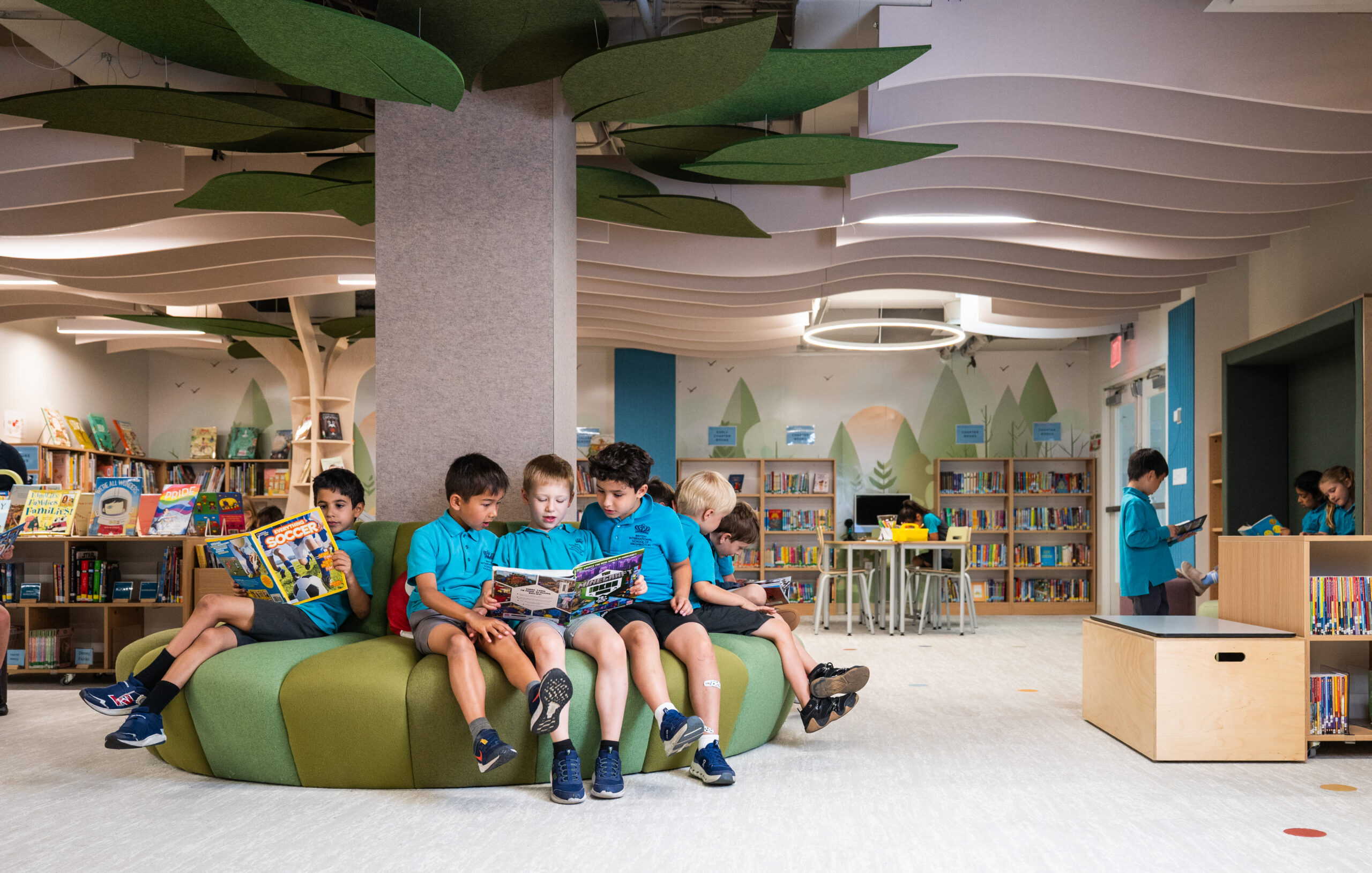
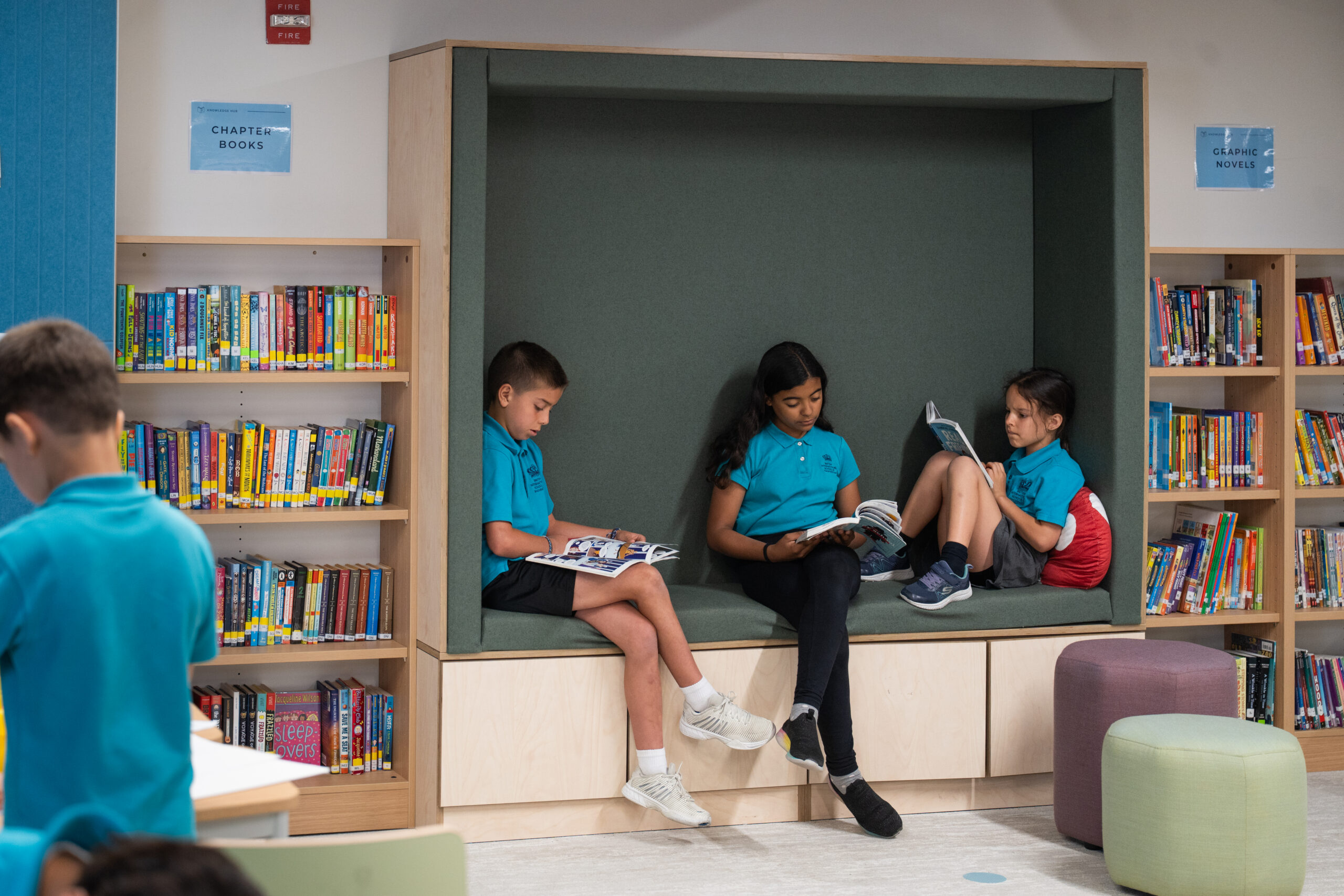
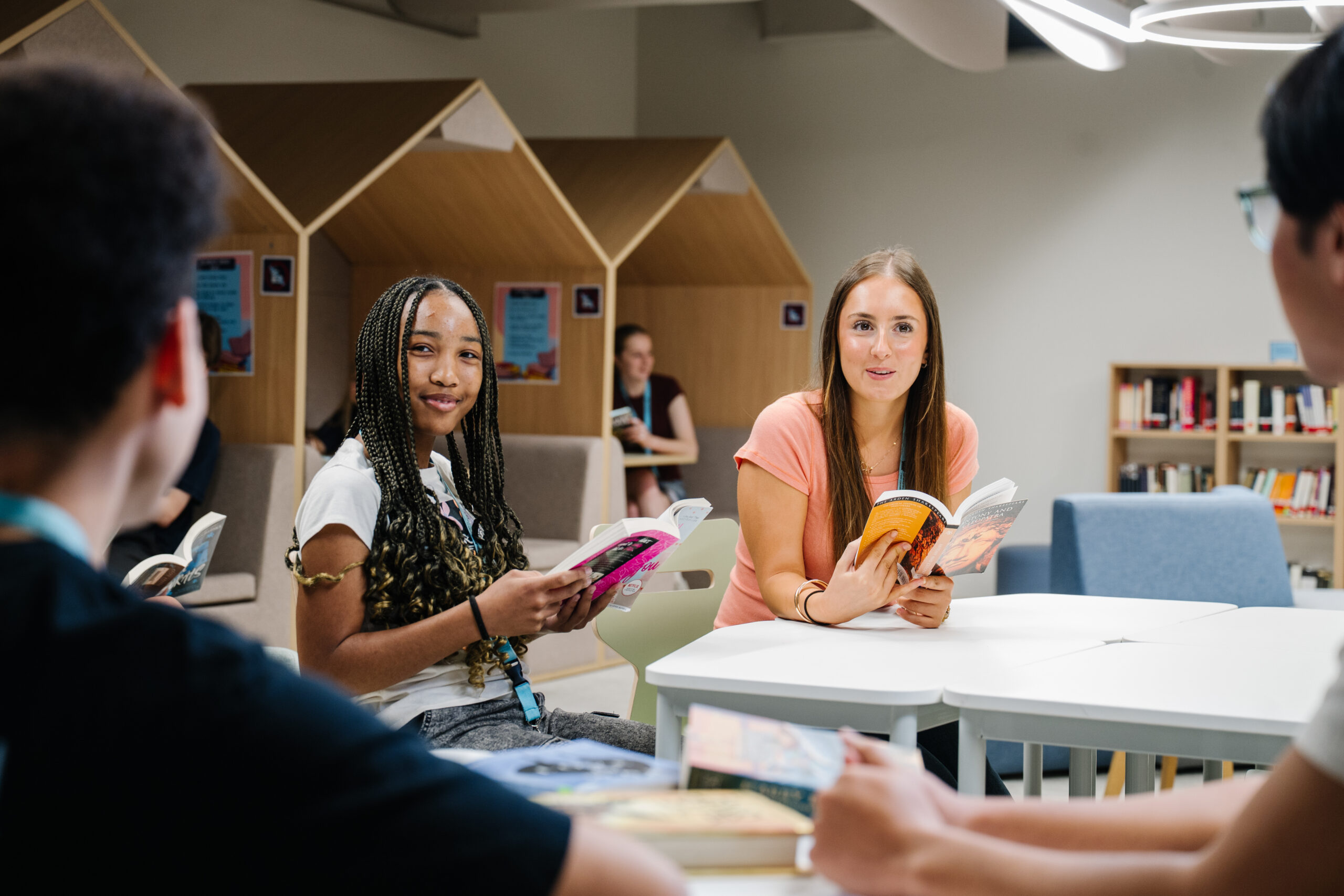
The Knowledge Hub is a library designed by Envoplan Group. It reflects the care and attention the British International School of Washington gives to every space.
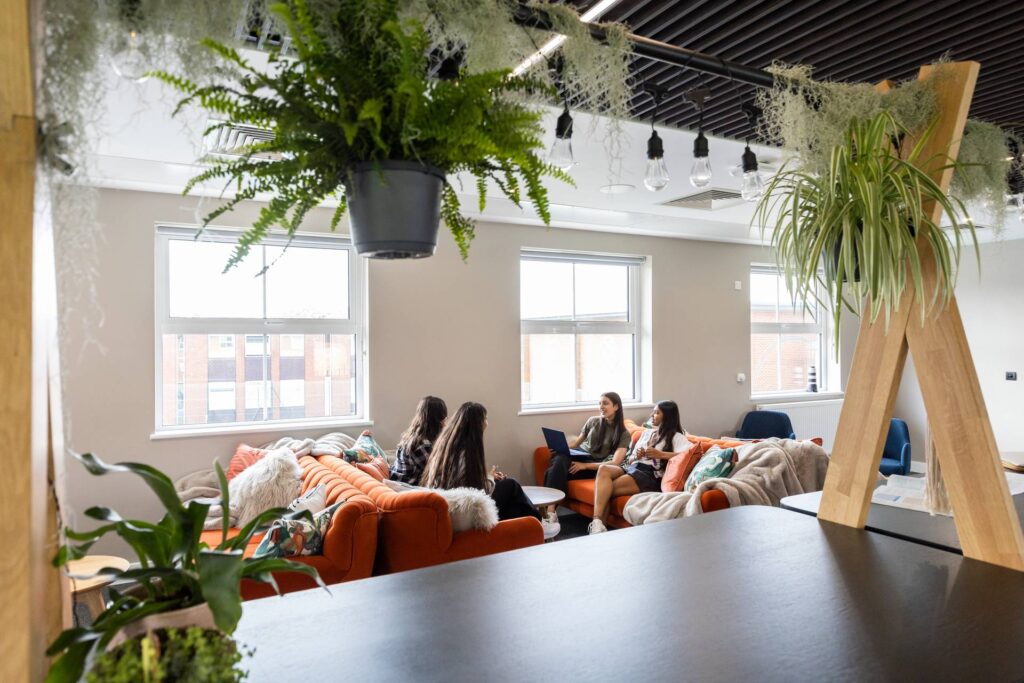
It supports children through their whole learning journey, from early years to older years, with an environment that grows with them. The concept is rooted in biophilia: a close connection with nature for the youngest children, moving gradually into a more structured, city-inspired space for older pupils. That progression nurtures curiosity, comfort and engagement at every stage.
52 cards and a journal
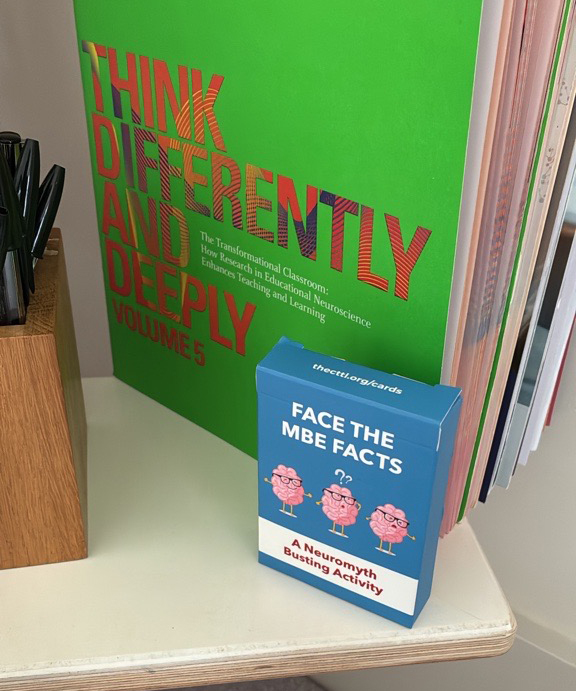
The research behind the day has been distilled into 52 cards and a journal, produced by the Center for Transformative Teaching and Learning (CTTL) at St Andrew’s Episcopal School. Each card is a research-informed statement that makes you think about how you could design activities for learning. With the journal and book, they are a snapshot of the CTTL’s work and how it can be applied in learning spaces.
Making something seem this simple is no easy job, and I started the day by questioning one of the cards. Jay Tilley and I met at the start of the conference and shared our thoughts with Glenn Whitman on aspects of the neuroscience of learning.
What came out of it is that the way you read a card matters as much as the statement on it. Comparing the facts with what you infer from them tells you about your relationship with language, whether you can explain the reasoning behind your inference, and whether that reasoning holds.
What the best coaches see
The best coaches see the very best in those they work with. They see the potential and the strengths. They acknowledge the challenges people face, and they guide them to keep wanting to improve, however difficult that is.
Some of how they do it was shared on the day. Certain activities have more impact than others. Starting the day with music gives some people a moment to reflect, and perhaps to wake up. For others it’s a chance to consider the complexity of the knowledge and skills involved, and to be inspired to perform like that themselves.
Getting a whole school together is valuable in its own right. It’s a reason to celebrate, a reason to question, and a reason to be together and feel the power of a team.
Four sessions that stayed with me
Rebecca Winthrop: the disengaged teen
Rebecca Winthrop of the Brookings Institution, co-author of The Disengaged Teen, presented her work on disengagement, using a matrix to show how a young person’s thinking can move from passive to active, and so become more engaged. It looks at what a sense of belonging is through levels of motivation, linked to how pupils perceive their own achievement. Framing identity around being an explorer of learning turns self-determination theory into a framework you can use.
Jessica Garner and Winston Roberts: roles for AI
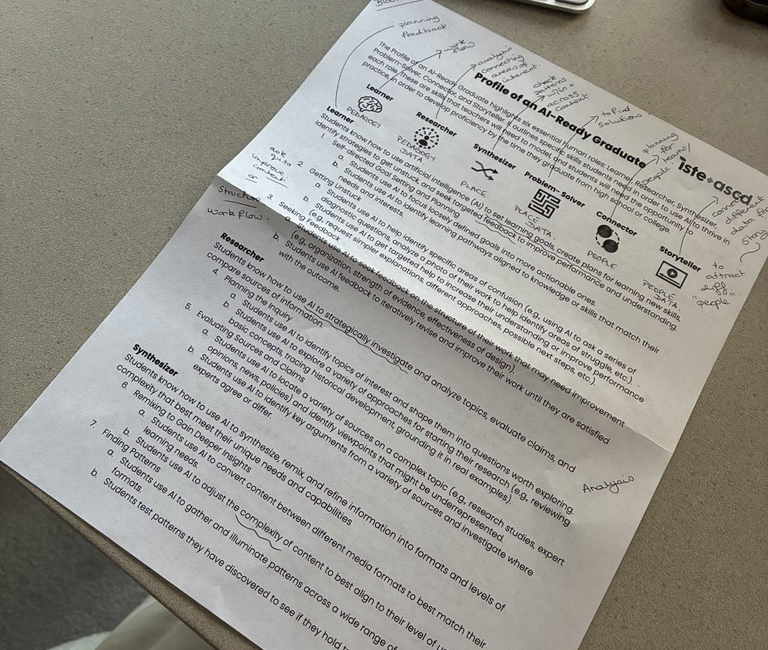
Jessica Garner and Winston Roberts presented a framework for understanding AI’s answers through the role it is playing. Their six roles (learner, researcher, synthesiser, problem-solver, connector and storyteller) can be used as descriptors in your prompts. The role you choose gives the model a voice and persona, and takes you deeper into how it processes.
Through a Noble + Eaton lens, the roles line up with our work. The learner and researcher are about pedagogy: the planning and workflow that reveal the thinking behind decisions. The synthesiser and problem-solver are about place: finding patterns within and across contexts to recommend solutions. The connector and storyteller are about people: turning complex communication into compelling narratives across different media.
Doug Lemov: noticing through lesson study
Doug Lemov, author of Teach Like a Champion, shared his experience of observing questioning, noticing and grouping through lesson study. He showed how the set-up of a language lesson, from its objectives to the reading activity, the discussion and the layout of the classroom, can lead to different outcomes for each learner.
Dominick Hand and Ned Johnson: raising the baseline
I spoke at length with Dominick Hand and Ned Johnson, co-author of The Self-Driven Child, about the power of culture and self-identity, and how assessment captures it through situational hierarchy, power, and the awareness of its absence. Dominick’s research showed that applying the work has raised the baseline of what is possible. It hasn’t necessarily closed the learning gap, because postcode criteria still decide access to funding.
Capturing what coaches see
One database, many options. Looking at what coaches need through a systems design lens is a new area of interest for me, as I start to see how a data system can track what the very best coaches see naturally.
You often hear that if it isn’t tracked, it doesn’t get done, or it doesn’t get noticed. But how do you capture progress in learning in a way that means something to you, and can be connected and shared with peers and learners? The answer runs from curriculum maps to individual flows of learning.
The micro-level data has to capture what the teacher is seeing: the progress being made, and which activities are having an impact. Gathered across sessions over time, it builds a learning map by learner, by subject and even by activity type. Toddle was one of the platforms shared at the conference that can do this. Structured well, it gives teachers time back for the conversations that matter most.
Spaces designed to adapt
The Festival of Education is underpinned by research, through an educational psychology lens. That lens will help schools move from fixed timetables to adaptive group work and one-to-one coaching, by understanding each activity, its objectives and its influence on learning.
This is where space comes in. Purposely flexible spaces deliver because they have been designed by the people who lead in them to adapt as needed. That design is built around effective decision-making: using expert knowledge and skills where they fit, and asking for feedback and support where there is room to develop. Self-awareness means moving up and down the scale from expert to novice, in the moment and over time.
If 52 cards can’t capture the research, a few hundred words can’t capture the conference. My way of saying thank you is to get this applied in more schools. I might love to read, but I much prefer to do.





Leave a Reply