Sixth form is a unique stage in a young person’s education. It is a short but intense period, where independence grows rapidly, academic expectations rise sharply, and students begin to define the pathways that will shape their futures.
Because of this, the spaces sixth formers inhabit matter enormously.
Over the past year, we spoke with 127 educators across the UK and Europe to understand how well sixth form environments are currently supporting students and where leaders believe improvements are needed. What emerged from the research is both encouraging and revealing: sixth form spaces are generally performing well, but there remains significant untapped potential to make them even more effective.
While environmental factors are performing well, the research highlights that the greatest opportunity for improvement lies in what we might call the functional elements of learning spaces.
Three areas in particular stand out:
Biophilia (connection to nature)
Furniture design
Technology integration
Do you think your sixth form space represents your school's positioning and priorities accurately?
Are sixth form spaces actively supporting neurodiversity?
What do you believe would make your sixth form spaces more effective if it was improved?
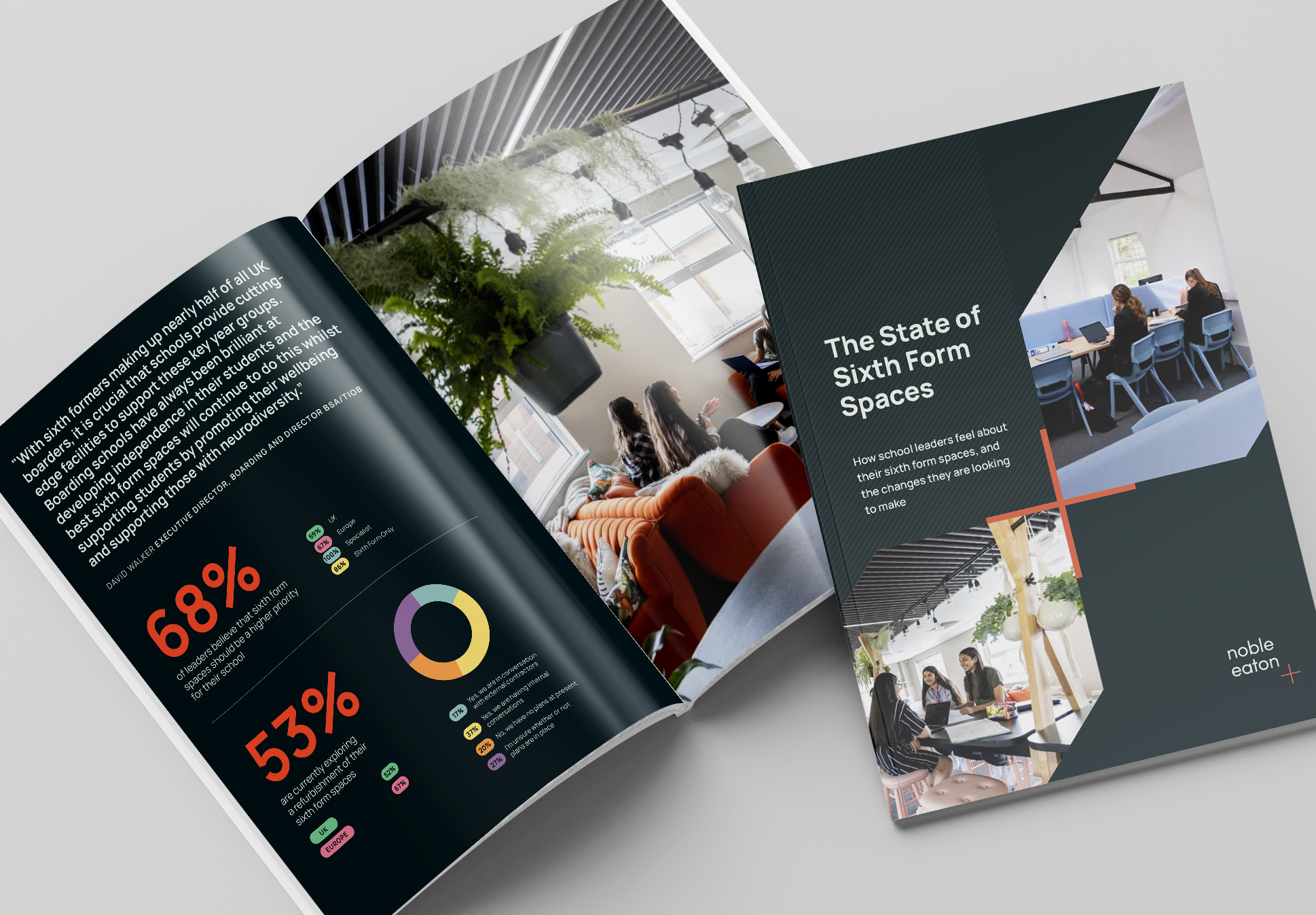
These were just some of the questions we set out to ask in The State of Sixth Form Spaces – a piece of research that combined:
An online survey of 127 educators across the UK and Europe
In-depth conversations with leading education thinkers
Our experience of working with 800+ schools over 50 years
Taking part proved to be incredibly worthwhile. The external perspective helped us see things we might have missed.
NICK CALE -
HEADTEACHER, BERKHAMSTED SCHOOL
Perhaps the most encouraging finding in the research is that many schools are already thinking about what comes next.
68%
of leaders believe sixth form spaces should be a higher priority for their school
53%
are already exploring refurbishment projects or planning future changes
This suggests that the sector is entering a new phase of development.
Schools are no longer asking whether environments matter — that question has largely been answered. Instead, leaders are asking a more sophisticated question:
How can our environments work harder for our students?
The data informing this research is the voice of the sector analysed and used to provide stimulating ideas for the future. It is where theory and practice meet to allow for informed decision making in the design of our schools.
ANDREW LEWER -
UK SENIOR ADVISER
FOR NOBLE + EATON
Download the full report to find out more about the current landscape and which aspects of sixth form spaces leaders want to prioritise.